
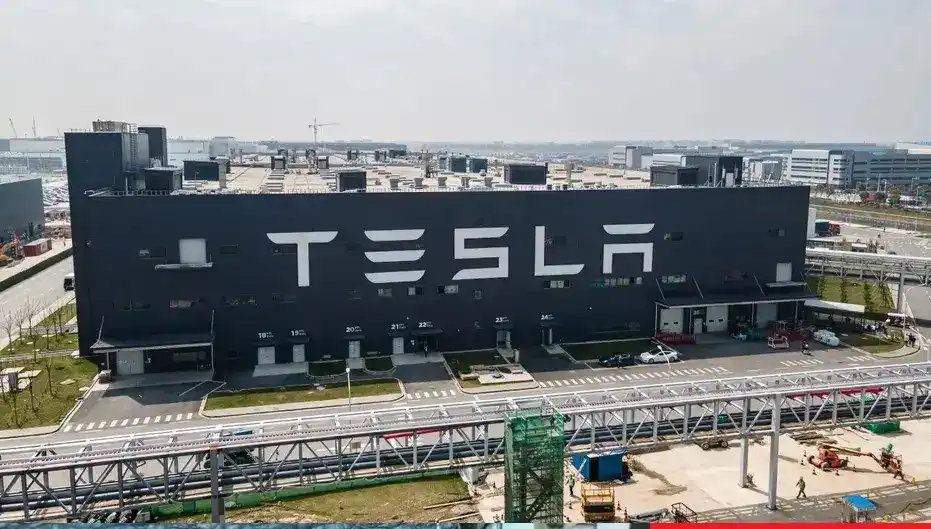
Tesla has secured regulatory approval for its Full Self Driving Supervised system in Belgium, marking the fifth European country to greenlight the controversial driver assistance technology. The transport minister for the Flemish region signed off on the approval Wednesday, paving the way for deployment once Tesla completes final testing requirements. Belgium joins the Netherlands, Lithuania, Estonia, and Denmark in allowing the electric vehicle manufacturer to offer the feature to customers, representing a gradual expansion of the system across the European Union.

The approval comes amid intense debate within the automotive industry about what Tesla’s technology actually represents. While some analysts have recently characterized Full Self Driving as having effectively achieved Level 4 autonomy, at least under most conditions, industry observers and users remain divided on whether such claims hold up to scrutiny. Level 4 autonomy, by official standards, means a vehicle can operate without human intervention in defined conditions. Yet Tesla’s system explicitly requires constant driver supervision and readiness to intervene, characteristics more aligned with advanced Level 2 systems.
Industry experts have coined the term Level 2 plus plus to describe Tesla’s current offering, representing driver assistance that can often handle vehicle operation in favorable weather but demands unwavering human attention. The distinction matters significantly for regulatory purposes and consumer expectations. A driver using a true Level 4 system could theoretically read a book or respond to emails, while Level 2 plus plus requires the same vigilance as traditional driving, merely with the steering wheel doing much of the physical work. Some specialists suggest the technology approaches Level 3 capability on divided highways under good weather conditions, though even this assessment comes with substantial caveats.

Questions about Tesla’s planned robotaxi service further complicate assessments of the technology’s maturity. Reports have emerged that the company employed data labelers to manually mark every significant feature in Austin, Texas for months, feeding this information into training algorithms to improve recognition capabilities. Critics argue this approach essentially constitutes mapping, contradicting Tesla’s long standing claim that its vision based system operates without reliance on pre mapped environments. While such training data may improve performance across all locations rather than just mapped cities, the approach raises questions about how quickly the technology can scale to new markets.
Transparency concerns also cloud the autonomy discussion. Tesla reportedly combines miles driven by fully autonomous robotaxis with those driven by vehicles operating with human safety drivers in its public reporting. Such commingling of statistics makes independent assessment of true driverless capability nearly impossible for outside observers. Consumer vehicles operating under supervision generate vastly different safety data than vehicles operating without any human backup, yet distinguishing between these categories in public communications remains inconsistent. Government regulators have yet to mandate standardized incident reporting that would allow independent verification of intervention rates and failure modes.
Moving forward, Belgium’s approval represents incremental progress for Tesla’s European ambitions, though significant hurdles remain before the technology can claim true autonomous capability. The gap between supervised driver assistance and unsupervised autonomy involves not just technological refinement but fundamental questions about sensor redundancy, weather performance, and the unpredictability of consumer behavior versus controlled fleet operations. Whether additional European nations follow Belgium’s lead may depend less on the technology’s current state than on how regulators balance innovation encouragement against public safety imperatives. For consumers eager to experience advanced driver assistance, the expansion offers new possibilities, provided expectations remain firmly grounded in the system’s actual supervisory requirements rather than aspirational autonomy claims.













Leave a comment