
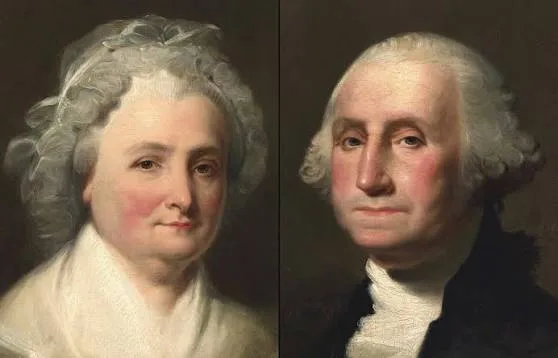
Long before fashion became an industry of global influence, America’s founding leaders understood that what a nation wears speaks volumes about what it stands for. George Washington’s deliberate choice to wear a suit made from American homespun fabrics at his 1789 inauguration was not merely a wardrobe decision but a political declaration. Together with First Lady Martha Washington, whose understated daily attire rejected European extravagance, the first couple elished a powerful visual language of independence that would echo through generations.
Their sartorial choices arrived at a critical moment for the fledgling Republic. Luxury imports such as silks, fine wools, and delicate lace had long symbolized colonial dependence on British and European markets. By consciously embracing domestically produced clothing, the Washingtons helped forge a distinctly American public identity rooted in self sufficiency and national pride. Fashion became inseparable from politics, a tool for shaping the social conscience of a nation still finding its footing after revolution.
As the young country moved into the 19th century, cotton emerged as the defining fiber of American fashion and commerce, though its story would become inextricably tied to the nation’s greatest moral failure. The Antebellum era transformed fashion into a visible marker of class and status, visually separating the elite from the working class and the enslaved population whose labor made the entire system possible. Cotton’s versatility proved undeniable, appearing in everything from fashionable wide skirts and petticoats to corsets, bonnets, kerchiefs, and household goods.

Innovation accelerated this transformation dramatically. Eli Whitney’s cotton gin, patented in 1793, revolutionized production by making cotton processing exponentially faster and cheaper. What had been an exclusive crop suddenly became widely accessible, fueling the first wave of the Industrial Revolution as production shifted from handmade to machine manufactured goods. The availability of cotton expanded rapidly, and with it came the growth of an emerging fashion industry that would eventually rival any in the world.
Despite these domestic advances, American style remained heavily influenced by European aesthetics throughout the late 18th century. Most clothing continued to be custom made or produced at home, often incorporating Indigenous techniques and knowledge. Yet the aspirational fashions of French and British courts still dictated trends, reaching American consumers through colorfully illustrated fashion plates and even French dolls dressed in miniature versions of the latest styles. Cultural independence in dress would prove slower to achieve than political independence.

The infrastructure supporting fashion consumption evolved alongside production ods. As transportation networks improved and the economy expanded, palatial dry goods stores began appearing in urban centers like New York City, marking the birth of what would become the modern department store. These retail palaces represented more than commercial spaces; they signaled a fundamental shift in how Americans would encounter, desire, and acquire fashion for centuries to come. From Washington’s homespun suit to Whitney’s mechanical innovation to the rise of retail, the decades surrounding American independence laid the foundation for a fashion system that would eventually dominate global culture.










Leave a comment